

In 2015, 75% of women with jawline acne reported persistent acne, versus 52% without jawline-localized acne. The Journal of the European Academy of Dermatology and Venereology reported the international dermatologist-based survey of 374 women aged 25 or older with acne.
But the same paper also found a broader split: among all adult women in the survey, 51% said acne had been present all or most of the time since onset, while 25% reported acne first appeared at age 20 or older.
Persistent acne was the larger group overall
Persistent acne meant acne was present for all or most of the time since it began. The survey also recorded relapsing acne, meaning substantial periods without acne. In the full group, 25% reported relapsing acne, and 24% did not answer or could not remember.
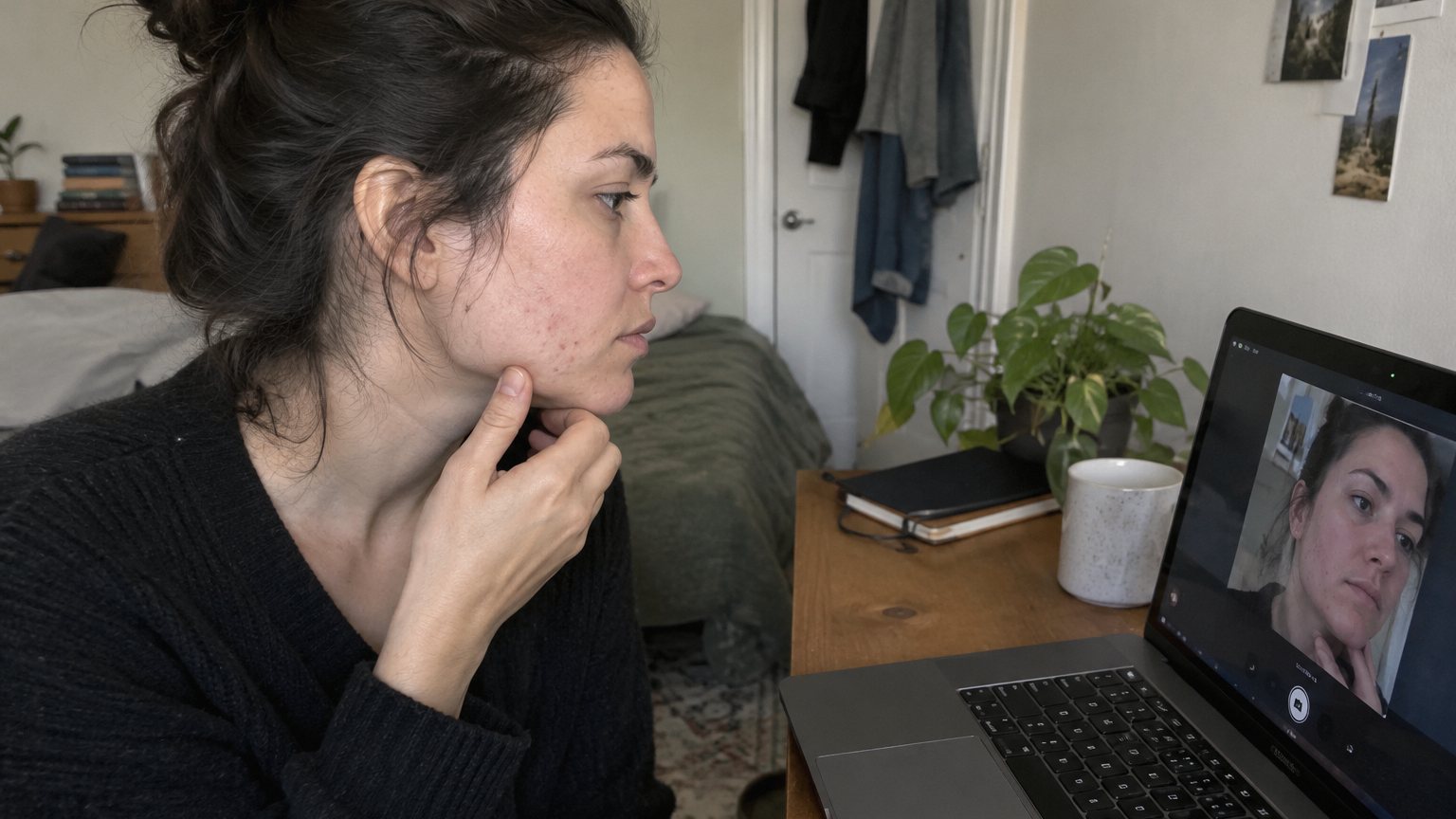
Take an adult woman aged 25 or older who checks her lower face before a work video call. If her acne began earlier and keeps returning around the jawline, the closest group in this survey is the 75% jawline-acne group reporting persistence.
That comparison does not say every jawline breakout has the same cause. It says that, among women seen in these dermatology practices, jawline-localized acne was more often reported as an ongoing course than acne that first appeared later in adulthood.
Oil, pores and inflammation can make an old pattern feel current
The survey did not test hormones, oil or treatment response. It did record where acne appeared and when it began. Acne is still visible in active bumps, redness and marks, even when the underlying pattern has been going on for years.
For a reader staring at the lower half of the face on a laptop preview, the key difference is timing. A persistent course can still flare, settle and return. A late-onset course begins in adulthood, even if the breakouts look similar in the mirror.
Most women remembered acne starting before adulthood
The 2015 survey asked women to recall when acne first appeared. Investigators recorded onset as before age 12, ages 12 to 19, ages 20 to 25, or after age 25. A slight majority, 56%, recalled acne beginning between ages 12 and 19.
Another 5% reported acne beginning before age 12, while 25% reported adult onset at age 20 or older. For 13%, the information was missing or the participant could not remember. That missing group is important when comparing your own timeline.
Among jawline cases, 75% reported persistence
The study used the term mandibular acne for acne localized to the mandible, or jawline. In that subgroup, 75% reported persistent acne. Among women whose acne was not localized to the mandible, 52% reported persistent acne.
A separate PubMed abstract from the Indian Journal of Dermatology also pointed in the same direction. Among 280 adult acne patients, 82% were women and 18% were men. Persistent acne was reported in 73%, while late-onset acne was reported in 27%.
Why is the comparison incomplete for men?
The strongest jawline comparison in the located primary source is for adult women. The 2012 PubMed abstract included men and women, but the abstract did not provide the same jawline-specific persistent-versus-late-onset split for men.
So a man with lower-face acne can read the broader persistence numbers with caution, but he does not get the same like-for-like group here. The clearest comparison is adult women with acne, especially women whose acne was localized to the jawline.
The split for jawline acne and adult onset
The table puts the reader-comparison groups side by side. The primary 2015 source did not give the same persistent-versus-late-onset crosstab for men, so the closest comparison here is adult women with acne.
| Adult women with acne group | Measure reported |
|---|---|
| All women, persistent acne | 51% |
| All women, acne first appeared at age 20 or older | 25% |
| Women with mandibular, or jawline, acne, persistent acne | 75% |
| Women with mandibular, or jawline, acne, adult onset | 49% |
| Women with acne not localized to the mandible, persistent acne | 52% |
What this means for you
If your lower-face acne feels like the same pattern you have watched for years, you are not outside the main group in this survey. Among women with jawline acne, persistent acne was more common than a new start after age 20.
Bring the timeline to a dermatologist or pharmacist: when acne began, where it appears, whether it relapses, and what you have tried. They can explain options such as benzoyl peroxide, retinoids, hormonal treatment or prescription medicines, and how to use them safely.