

In 2025, 23% of people followed after isotretinoin had acne relapse, and 8.2% had isotretinoin again. JAMA Dermatology reported the figures from 19,907 patients in a commercial claims cohort.
But the return pattern was not the same for everyone. Female sex was linked to higher acne relapse, while it was linked to lower repeat isotretinoin treatment. Higher cumulative isotretinoin amount was linked to lower rates for both outcomes.
Nearly 1 in 4 had acne return after treatment ended
The JAMA Dermatology study used MarketScan commercial claims from January 1, 2017, to December 31, 2020. Patients had acne, were age 12 or older in the source cohort, had isotretinoin for 4 months or longer, and had at least 1 year of follow-up after finishing.
The cohort included 4,482 acne relapses and 1,639 isotretinoin retrials. Among all included patients, the mean age was 20.6 years, with a standard deviation of 7.8 years.
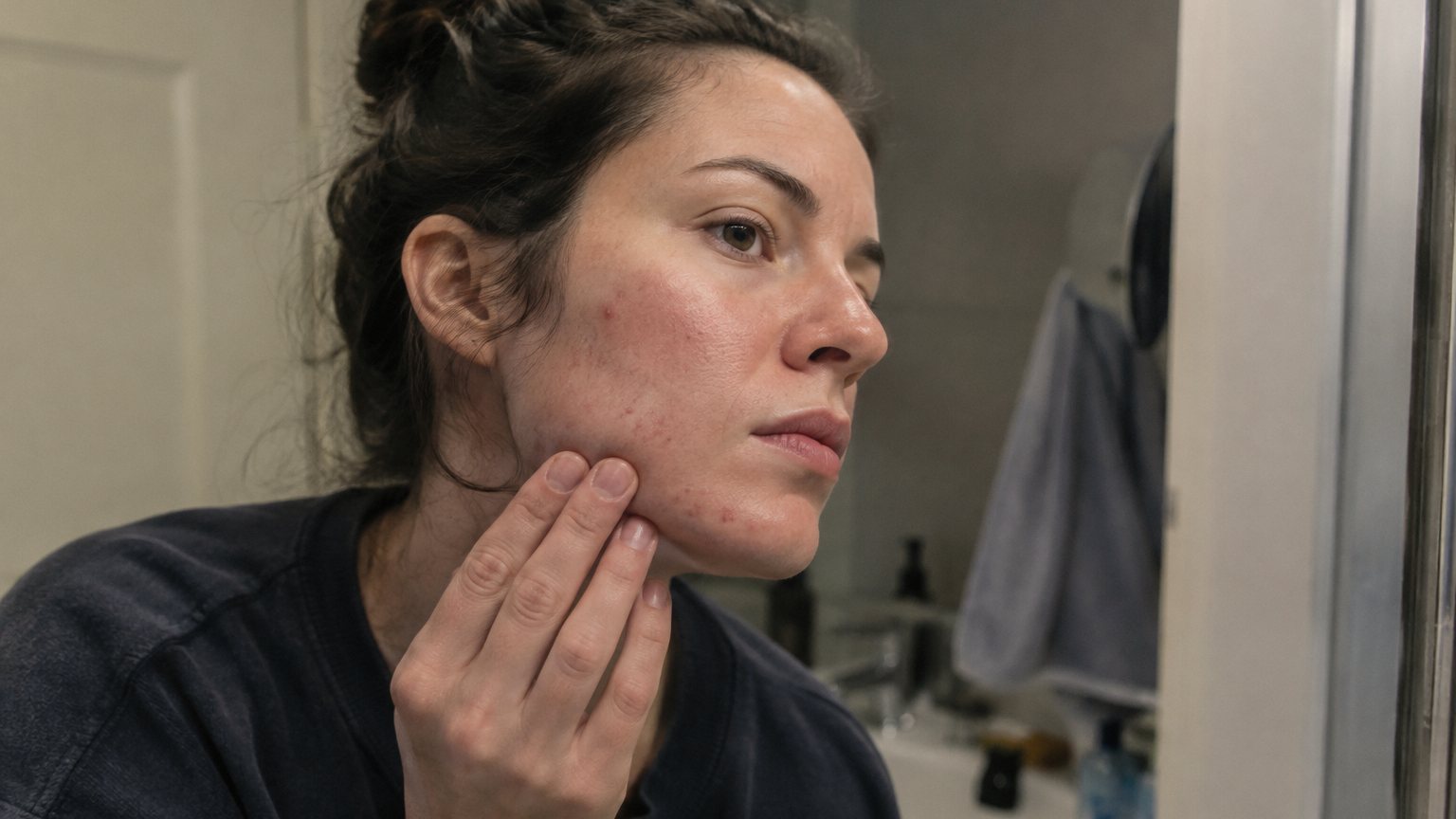
Take an adult who has just finished isotretinoin and is checking her jawline before a work video call. In this claims study, the overall relapse share was 23%, while the share with a repeat isotretinoin course was 8.2%.
Oil and inflamed pores can become visible again after the course
The study counted relapse through acne treatment claims after isotretinoin ended. It did not measure oil, pores, redness or marks one by one. For someone looking in a bathroom mirror, the counted event is practical: acne treatment was needed again.
Isotretinoin is used for acne severe enough to need a systemic medicine, meaning a medicine that affects the body broadly. After the course, a new treatment claim can reflect returning breakouts, clogged pores, inflamed bumps or ongoing acne care. The study does not say every returning spot looked the same.
Why did women have more relapse but fewer retrials?
Female sex had a hazard ratio of 1.43 for acne relapse. A hazard ratio compares how fast an outcome happens between groups over time. Here, the source reported higher relapse rates for female patients than for male patients.
For isotretinoin retrial, the direction flipped. Female sex had a hazard ratio of 0.68, which the journal reported as a lower rate of repeat isotretinoin treatment. The same study therefore found more relapse, but fewer repeat isotretinoin courses, among female patients.
The claims data do not explain the reason for that split. It may reflect treatment choices, clinician decisions or patient preference. The study can report the association, not diagnose why it happened.
Higher cumulative amount was linked to fewer repeat courses
The study also compared cumulative isotretinoin amount groups. Patients in conventional and high cumulative amount categories had lower acne relapse and lower isotretinoin retrial rates than patients in the low cumulative amount category, according to JAMA Dermatology.
For repeat isotretinoin, the source categories listed 13% in the low cumulative amount group, 5.0% in the conventional group, and 5.5% in the high group. Those figures do not tell you how to take isotretinoin. That decision belongs with a dermatologist.
The post-isotretinoin breakdown by group
The table shows the main outcome figures and subgroup measures reported for the post-isotretinoin cohort.
| Post-isotretinoin outcome or patient subgroup | Measure |
|---|---|
| All patients: acne relapse | 23% |
| All patients: isotretinoin retrial | 8.2% |
| Female sex: acne relapse | 1.43 hazard ratio |
| Female sex: isotretinoin retrial | 0.68 hazard ratio |
| Low cumulative amount group: isotretinoin retrial | 13% |
| Conventional cumulative amount group: isotretinoin retrial | 5.0% |
| High cumulative amount group: isotretinoin retrial | 5.5% |
What this means for you
If acne comes back after isotretinoin, you are not alone in this 2025 cohort. About 23% had acne relapse, and 8.2% had isotretinoin again. Those numbers do not predict your exact skin, but they give a real comparison point.
Track where breakouts return, such as jawline, cheeks, chest or back, and note whether they are clogged bumps, inflamed bumps or deeper painful spots. Ask a dermatologist or pharmacist how to use any treatment safely, including topical care, hormonal options or another prescription plan.