

In 2021, adults using benzoyl peroxide plus niacinamide had 51% fewer clogged bumps, versus 34% with cream base. The PMC journal article described it as a double-blinded, randomized, controlled, split-face trial.
But the same trial found greasy skin at 29% on both sides at Week 12. Post-acne erythema, the flat red mark that can linger after a bump, was not statistically different between sides.
The extra change was in clogged bumps, not shine
The 2021 trial followed 21 adults aged 18 to 36 with mild to moderate facial acne vulgaris. Acne vulgaris is the common acne pattern of clogged pores, red bumps, pustules or a mix of those lesions.
The split-face design matters for anyone comparing cheeks in a bathroom mirror or on a video call. Each person served as their own comparison, with benzoyl peroxide plus niacinamide on one side and benzoyl peroxide plus a cream base on the other side for 12 weeks.
The measured win was in noninflammatory lesion counts. In plain English, those are clogged bumps such as comedones, rather than red, swollen bumps. The reported reductions were 51% on the niacinamide side and 34% on the cream-base side.
Take an adult in the trial’s 18-to-36 age range who is checking cheek texture before a work call. If their face tracked the study averages, the side with the add-on would be judged against the 51% lesion-count reduction, while the comparison side would be judged against 34%.
Pores may look flatter while oil still catches the light
Clogged bumps and shine are separate visible problems. In this trial, the clogged-bump count fell more on the niacinamide side, yet greasy skin was recorded as 5 (29%) on that side and 5 (29%) on the cream-base side at Week 12.
That split fits a real mirror problem. Texture may look calmer in one area while oil still reflects bathroom light, office light or a laptop camera. The trial did not report a clear between-side difference for greasy skin.
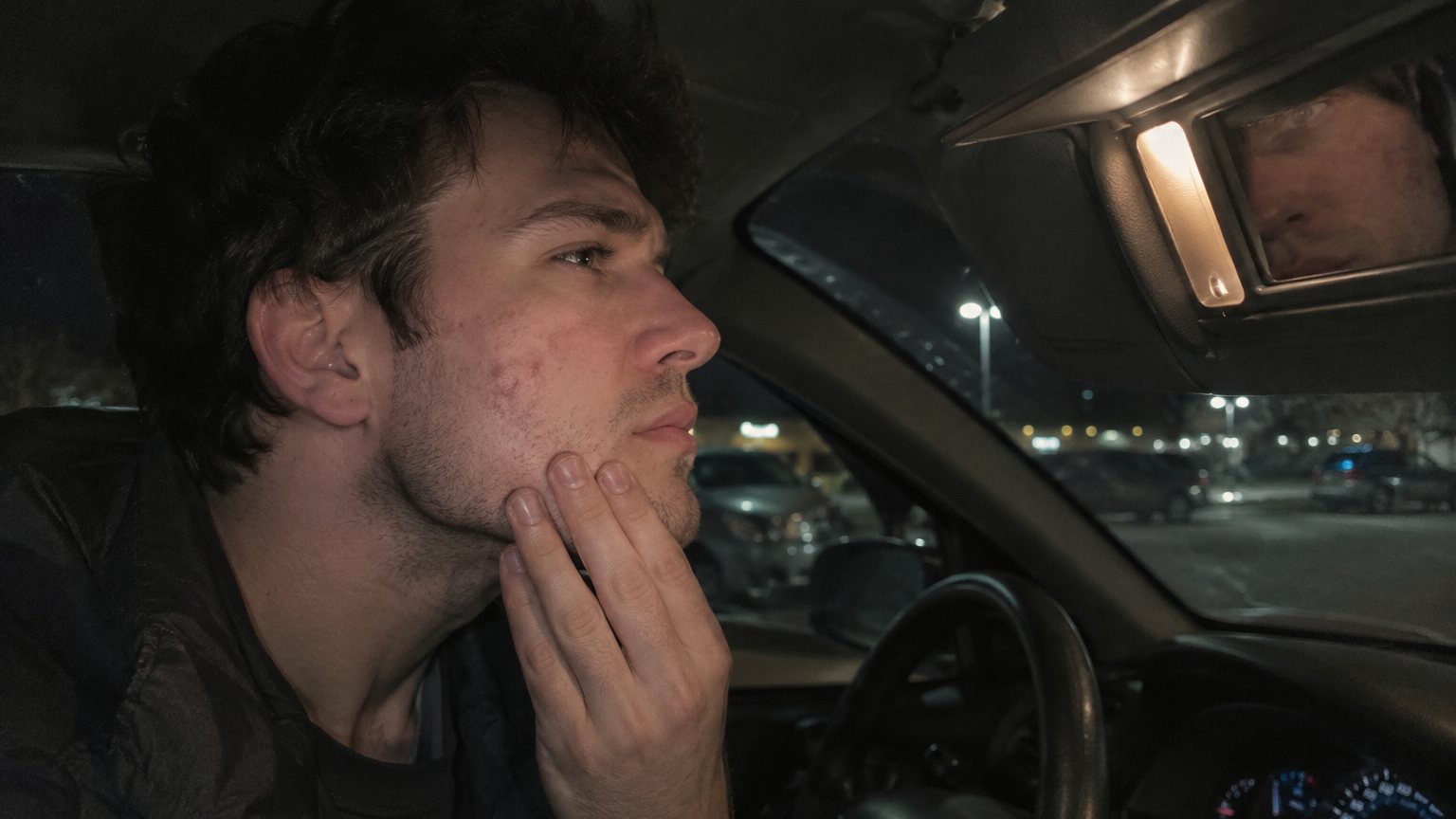
Greasy skin stayed at 29% on both sides
The side-effect table in the 2021 PMC article makes the shine finding hard to miss. At Week 12, greasy skin was listed as 5 (29%) on the niacinamide side and 5 (29%) on the cream-base side, with no significant between-group difference reported.
For a reader already using benzoyl peroxide, that means the main 2021 payoff was not less visible oil. The useful expectation is narrower: the add-on side had a larger reduction in clogged bumps, while shine did not clearly separate from the comparison side.
Why was redness still stubborn?
The 2021 trial reported that postacne erythema scores were not statistically different from baseline or between the 2 groups at every follow-up visit. Postacne erythema means the red or pink color that can remain after an inflamed spot settles.
A 2011 Turkderm study gives another view of niacinamide in acne. In 29 female patients, inflammatory lesions dropped from 12.24 before treatment to 6.14 after 8 weeks. Noninflammatory lesions did not have a statistically significant decrease at the end of 8 weeks.
That 2011 group included patients aged 16 to 38, with a mean age of 23.57±5.42 years. Crowley Star is not using that mixed-age group for an adult example, but the lesion-count result helps separate red inflamed bumps from clogged bumps.
An older trial put nicotinamide beside an antibiotic gel
The 1995 PubMed and National Library of Medicine record used the name nicotinamide, another name for niacinamide. It randomized 76 patients with moderate inflammatory acne, with 38 assigned to nicotinamide gel and 38 assigned to clindamycin gel over 8 weeks.
After 8 weeks, 82% in the nicotinamide group and 68% in the clindamycin group were rated improved. Papules and pustules fell 60% with nicotinamide and 43% with clindamycin. Acne severity fell 52% and 38%, respectively.
Those older figures come from inflammatory acne, not the same clogged-bump outcome as the 2021 split-face trial. Read together, the studies place niacinamide in a mixed evidence picture: some acne counts improved, but shine and post-acne redness were not clearly better in the split-face comparison.
The side-by-side numbers readers can check
The main figures come from three acne studies. Together, they separate clogged bumps, red inflamed bumps, greasy skin and post-acne redness.
| Study and measure | Reported finding |
|---|---|
| 2021 split-face trial: noninflammatory lesions | 51% reduction with benzoyl peroxide plus niacinamide; 34% with benzoyl peroxide plus cream base |
| 2021 split-face trial: greasy skin at Week 12 | 5 (29%) on the niacinamide side; 5 (29%) on the cream-base side |
| 2021 split-face trial: post-acne erythema | Scores were not statistically different from baseline or between groups |
| 2011 Turkderm study: inflammatory lesions | 12.24 before treatment; 6.14 after 8 weeks |
| 2011 Turkderm study: noninflammatory lesions | No statistically significant decrease after 8 weeks |
| 1995 randomized trial: improved patients | 82% with nicotinamide gel; 68% with clindamycin gel |
| 1995 randomized trial: papules and pustules | 60% reduction with nicotinamide; 43% with clindamycin |
| 1995 randomized trial: acne severity | 52% reduction with nicotinamide; 38% with clindamycin |
What this means for you
If benzoyl peroxide is already part of your acne care, niacinamide is an add-on to ask about, not a promise. The strongest number here is for clogged bumps in the 2021 split-face trial. The same trial did not find better greasy skin or post-acne redness.
If your face looks shinier, redder or more irritated after acne products, do not judge by one mirror check. Ask a dermatologist or pharmacist how benzoyl peroxide, niacinamide, clindamycin or other options fit your skin, acne pattern and irritation history.