

Adults with acne had low vitamin D in 49% of cases in 2016, compared with 23% of healthy adults. The PLOS One study, indexed on PubMed, included 80 acne patients and 80 healthy controls.
But the supplement question is less neat. Later randomized trials, including a 44-person 2024 trial in the International Journal of Women’s Dermatology and a 100-person randomized acne subgroup published by Springer in 2020, did not tell one simple story.
Acne patients were much more often deficient
The 2016 PLOS One paper measured deficiency in 25(OH)D, the blood form of vitamin D used in the study. Its main comparison was straightforward: 80 acne patients were compared with 80 healthy controls, and deficiency was reported much more often in the acne group.
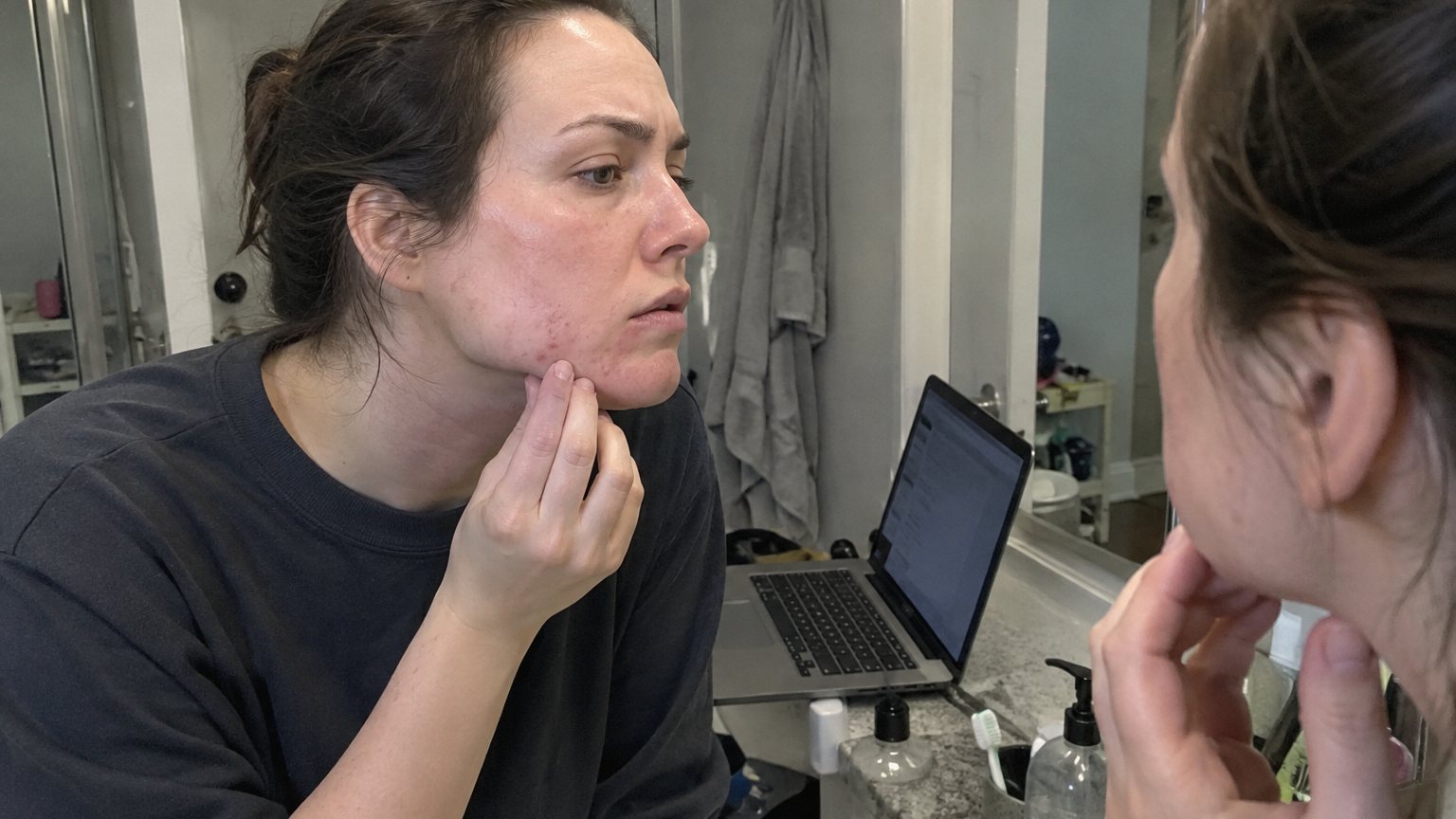
Take an adult who keeps checking jawline bumps before a work video call. The study number does not say a mirror can identify low vitamin D. It says that, among the 80 acne patients studied, deficiency was reported in 49%, while the 80 healthy controls had deficiency in 23%.
Inflammatory lesions are the skin-side link
The skin link in these papers is inflammation. In acne, inflammatory lesions are the red or tender bumps that often stand out on cheeks, the chin or the jawline. The PLOS One follow-up looked at 39 acne patients who had 25(OH)D deficiency.
That follow-up reported improvement in inflammatory lesions after vitamin D supplementation in those 39 deficient acne patients. It did not say every breakout has the same cause. It gives adults with red bumps a specific lab marker to discuss, rather than a diagnosis from appearance alone.
Why did the trials split?
The 2016 evidence was a case-control comparison plus a small follow-up. It can report that deficiency was more common in acne patients, and it can report lesion changes in 39 deficient acne patients. It cannot settle what every adult with acne should take.
The 2024 International Journal of Women’s Dermatology trial used a stronger comparison: it was randomized, double-blind and placebo-controlled, meaning participants were assigned to treatment or placebo and neither side knew the assignment. It included 44 subjects with mild-to-moderate acne.
In that 2024 trial, vitamin D2 did not beat placebo during treatment, but weekly vitamin D2 supplementation significantly prevented relapse of inflammatory acne lesions at follow-up, with P = .048. No adverse effects or biochemical changes were observed in the quoted report.
A 2020 trial also found lower vitamin D in acne patients
The 2020 Springer paper added another case-control comparison. It studied 100 acne patients and 100 healthy controls, and reported that serum 25-hydroxy-vitamin D levels were significantly lower in acne patients than in healthy controls.
The same 2020 paper said vitamin D levels were inversely correlated with acne severity. In plain English, lower vitamin D tracked with more severe acne in that study. The 100 acne patients were then randomized during a 3-month study period.
After alfacalcidol administration, the study group had significantly higher 25(OH)D levels than the placebo group, with p < .05. The public summary does not give a single easy lesion-count result, so the acne-treatment takeaway stays mixed.
Every acne group in the vitamin D evidence
Here is the breakdown from the public abstracts and summaries used for this story.
| Study group | What was reported |
|---|---|
| PLOS One acne patients, 2016 | 80 acne patients; 49% had 25(OH)D deficiency |
| PLOS One healthy controls, 2016 | 80 healthy controls; 23% had 25(OH)D deficiency |
| PLOS One supplementation follow-up, 2016 | 39 acne patients with 25(OH)D deficiency; inflammatory lesions improved |
| International Journal of Women’s Dermatology trial, 2024 | 44 subjects with mild-to-moderate acne; relapse prevention reached P = .048 at follow-up |
| Springer case-control comparison, 2020 | 100 acne patients and 100 healthy controls; vitamin D levels were lower in acne patients |
| Springer randomized acne subgroup, 2020 | 100 acne patients randomized during a 3-month study period; 25(OH)D rose more with alfacalcidol than placebo |
What this means for you
If your adult acne is active, especially red jawline or cheek bumps, low vitamin D can be a reasonable topic to raise. These studies do not say a supplement is an acne answer for everyone. They say deficiency was more common in acne patients, while trials were mixed.
Ask a dermatologist, primary care clinician or pharmacist whether vitamin D testing makes sense for you, and how any supplement or acne treatment fits your medicines, lab results, pregnancy plans and skin history. A mirror can show breakouts, but it cannot measure 25(OH)D.